The Power of Art in Shaping Global Awareness by Carole

By Carole Feuerman

Quan by Carole Feuerman

Art has taken me to many countries around the world. On any given day, I am standing in front of an audience of leaders. I also discuss the construction of my artwork with a viewer just walking by my sculpture. Working as an artist has brought me into contact with people who share both similar and different beliefs. It has introduced me to a vast range of perceptions, and ideas. I have profoundly been affected by participating in these local and global exchanges. They drive me to create art that touches people emotionally.

One of the great challenges facing us today is that we often feel powerless. We struggle when it comes to helping others. We also face difficulties in solving problems. We feel disconnected and incapable of changing world issues, but we must not be quiet. Only through letting our voices be heard can we have a say in shaping our world.

We face a great challenge today. We often feel powerless in helping others. This feeling extends to solving problems. We feel incapable of changing world issues, but we must not be quiet. Only through letting our voices be heard can we shape the world. Only through letting our voices be heard can we shape the world. 
Survival of Serena by Carole Feuerman

There are many artists who used their art to make change. Some of these artists' works be familiar to you, like Picasso. Others, whom you not know, have used diverse ways of communicating their perceptions. “Guernica” symbolizes Picasso’s moving anti-war testimonial. This large-scale painting conveys the chaos and torment of war.
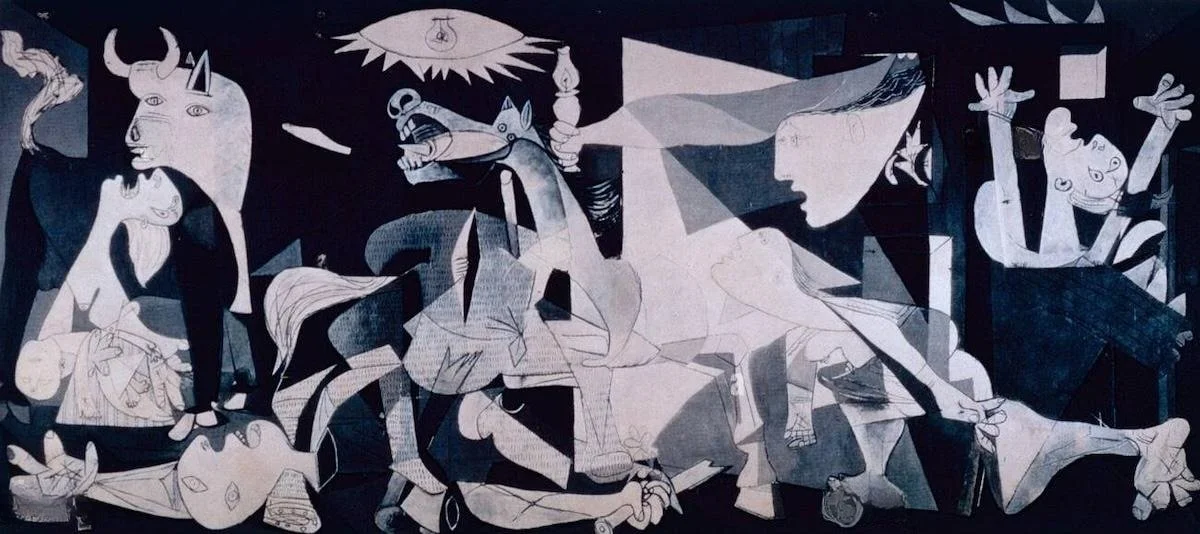
Guernica, Picasso

The Chinese artist, Ai Weiwei, created his works under a repressive regime. He made a temporary studio on the Greek Island of Lesbos. His goal was to bring attention to the plight of the millions of immigrants trying to enter Europe. He famously said,

“There’s no refugee crisis, but only a human crisis”. He posted images on social media of a helpless toddler being washed ashore. He laid his own body down to be photographed. He said that each human life is of equal importance. His photos shocked the world, making people aware of these human tragedies. He is an artist who is effecting change.

The Guerrilla Girls are an anonymous feminist activist group. They exemplify how artists focus on issues to expose gender and ethnic bias. They also reveal corruption in politics. It isn't necessary for any of them to know how to draw. Instead, they find original ways to convey powerful political messages and show their messages in public forums. They wear gorilla masks and use facts, humor, and outrageous visuals. They have made more than a hundred street projects from billboards to performance art demonstrations. They are most famous for circulating a poster that said:

“DO WOMEN have to get naked to have a show at the Met?"

You can also change the world by doing one small thing when you have time. You don't have to do much, the point is-- that you do something! Even a small thing makes a difference. If each one of us did one positive thing, the world would be a better place. Speak up, sign petitions, write letters or sit down with someone who has the power to change things.

Most of us know the feeling of being moved by a work of art. It is a painting or a sculpture. It is a song, a poem, a play, or a dance. When we are moved, we are touched; and then we are transported to a new place. We become aware of things that earlier were unfamiliar to us, situations that we didn’t focus on before. I believe that this is one of the major responsibilities of artists, -- to make people feel and become aware.

Maya Angelou, civil rights activist and trailblazing director, was a recipient of over 50 honorary degrees. She was also an educator. This poet had an incredible impact on society, especially within the world of poetry. 

She was the first African American woman to write a script that was made into a Hollywood movie. She was also the first female poet to read a poem at a President's inauguration. Additionally, she was the first female African American to be a cable car conductor. 

Her writing tackled race, gender and life.  Her poem 'Still I Rise’ carries a powerful message of resilience. This message of strength is still relevant today.

'Imagine' by John Lennon: The ex-Beatle was in his political phase. His hit song encouraged humanity to live peacefully as one group. Its message only became more touching after Lennon's shocking murder in 1980. Today, it continues to be the go-to song for moments of strife and tragedy.
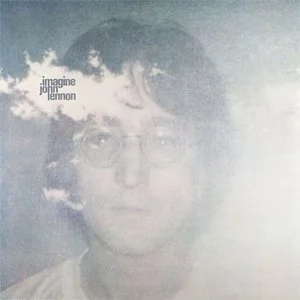
Imagine, John Lennon

When we think of leaders who make a difference, we not think of artists, poets, or songwriters as leaders. But, they have shaped cities and communities. They influence people's feelings for hundreds of years. I started making art when I was six years old. My art has shown me another way to communicate.

In 1979, while I sat at the beach with my three children, I saw a swimmer. She was emerging like a phoenix from the sea with water droplets streaming down her face. This vision took form in the creation of my first swimmer sculpture, which I named ‘Catalina’. She appears to all as a proud survivor, strong and beautiful. A woman who is fearless.
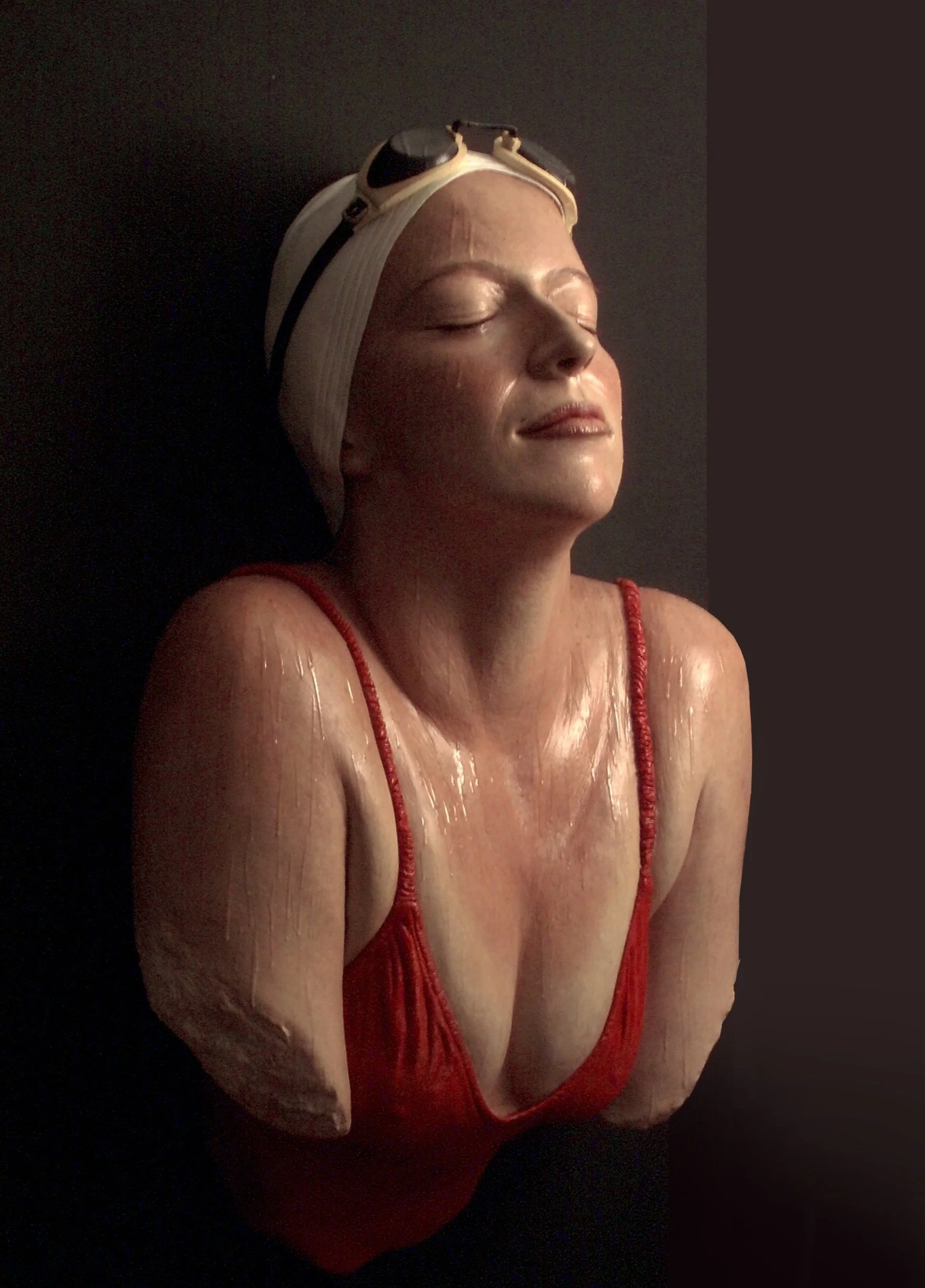
Catalina by Carole Feuerman

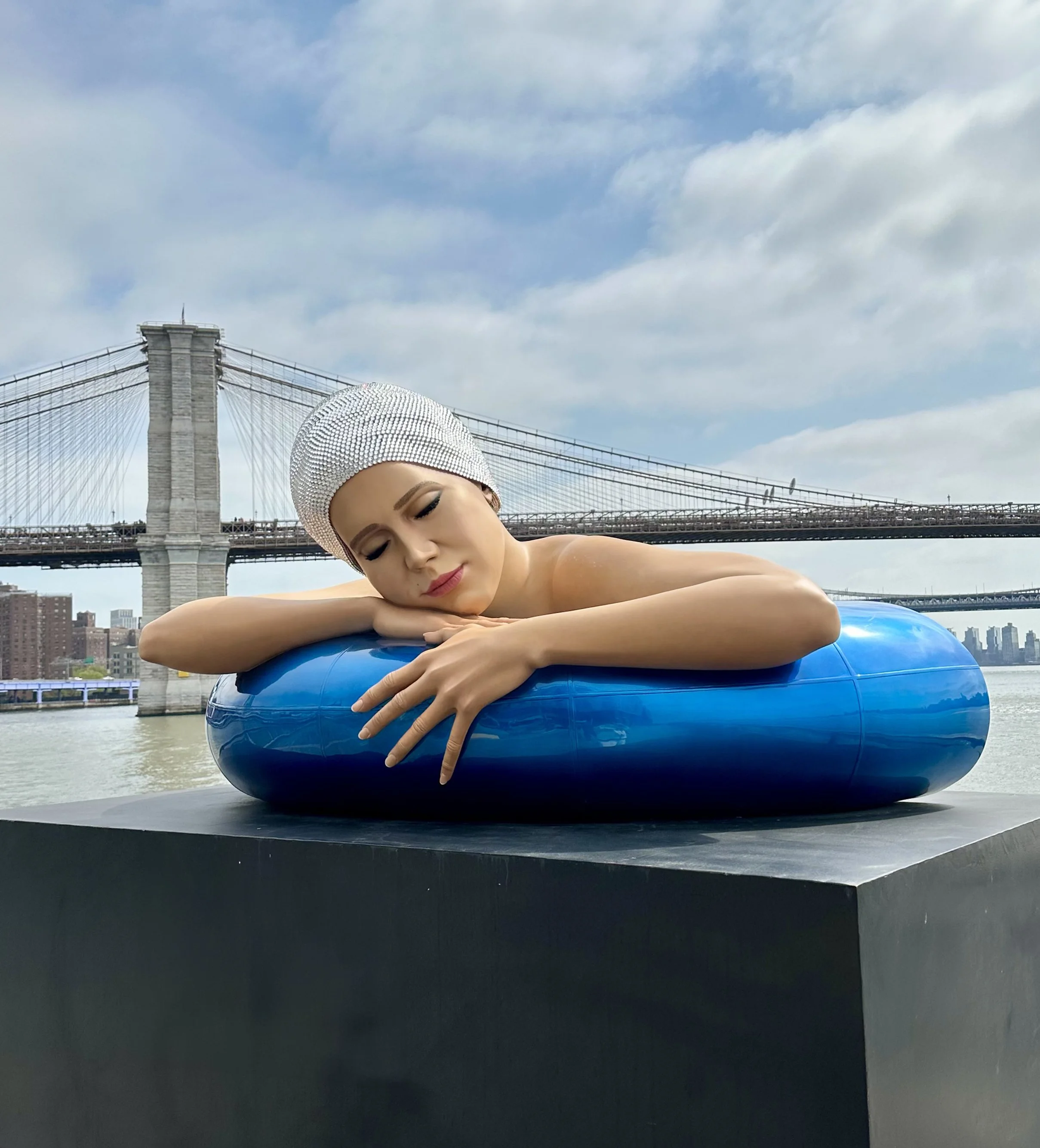
In 1981, I was inspired by immigrants that I saw floating from Cuba into Key West. This inspiration led me to make my most iconic swimmer sculpture. It is a contemplative woman resting peacefully on an inflatable tube. This serene and meditative sculpture is called the ‘Survival of Serena’. It was exhibited during the 2005 Venice Biennale in Italy. She was re-named Serenissima after the Island of Venice, the Serene Island.
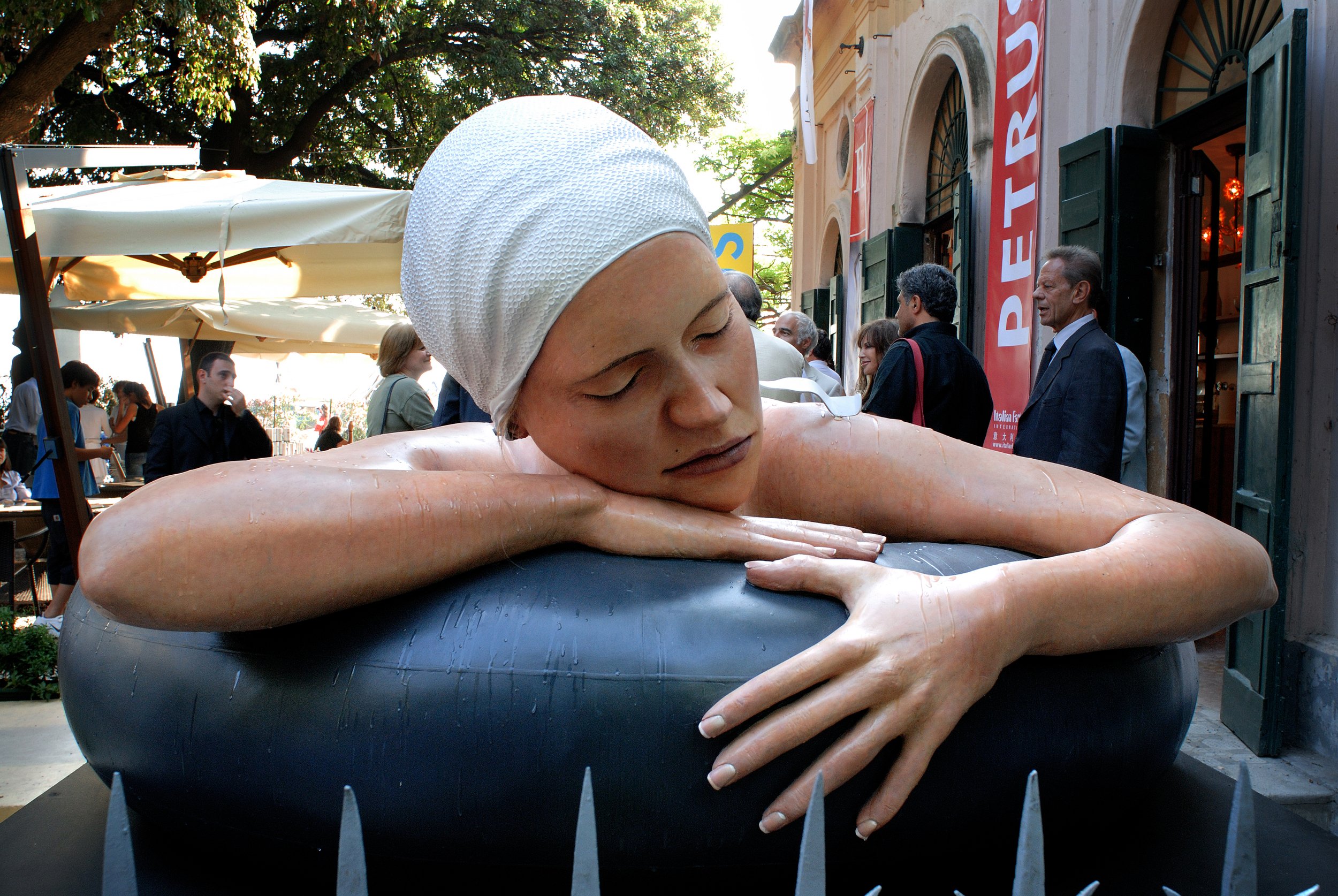
Survival of Serena in the Venice, by Carole Feuerman

I have used my works to be my voice. Images can speak volumes to people and be very powerful. After 9/11, I turned from my super-realistic figurative art and began making bronze spheres.
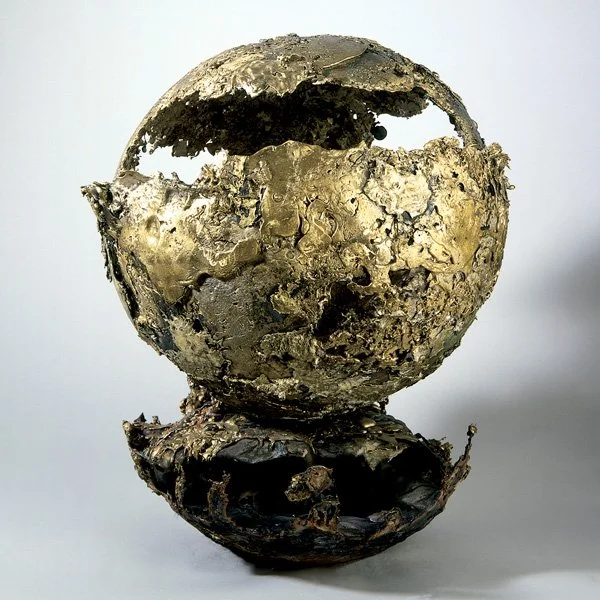
Still Standing by Carole Feuerman

In my sculpture ‘Still Standing’, I show that despite the fragmentation and empty areas, we remain one world. These parts represent bombings and violence. Yet, we are still here! 

Seen but Not Heard by Carole Feuerman

“Seen but Not Heard” is a sculpture portraying a young girl with her eyes closed and her mouth taped shut. She is bound as if she is not capable of being heard. In front of her is a bowl with no food in it.
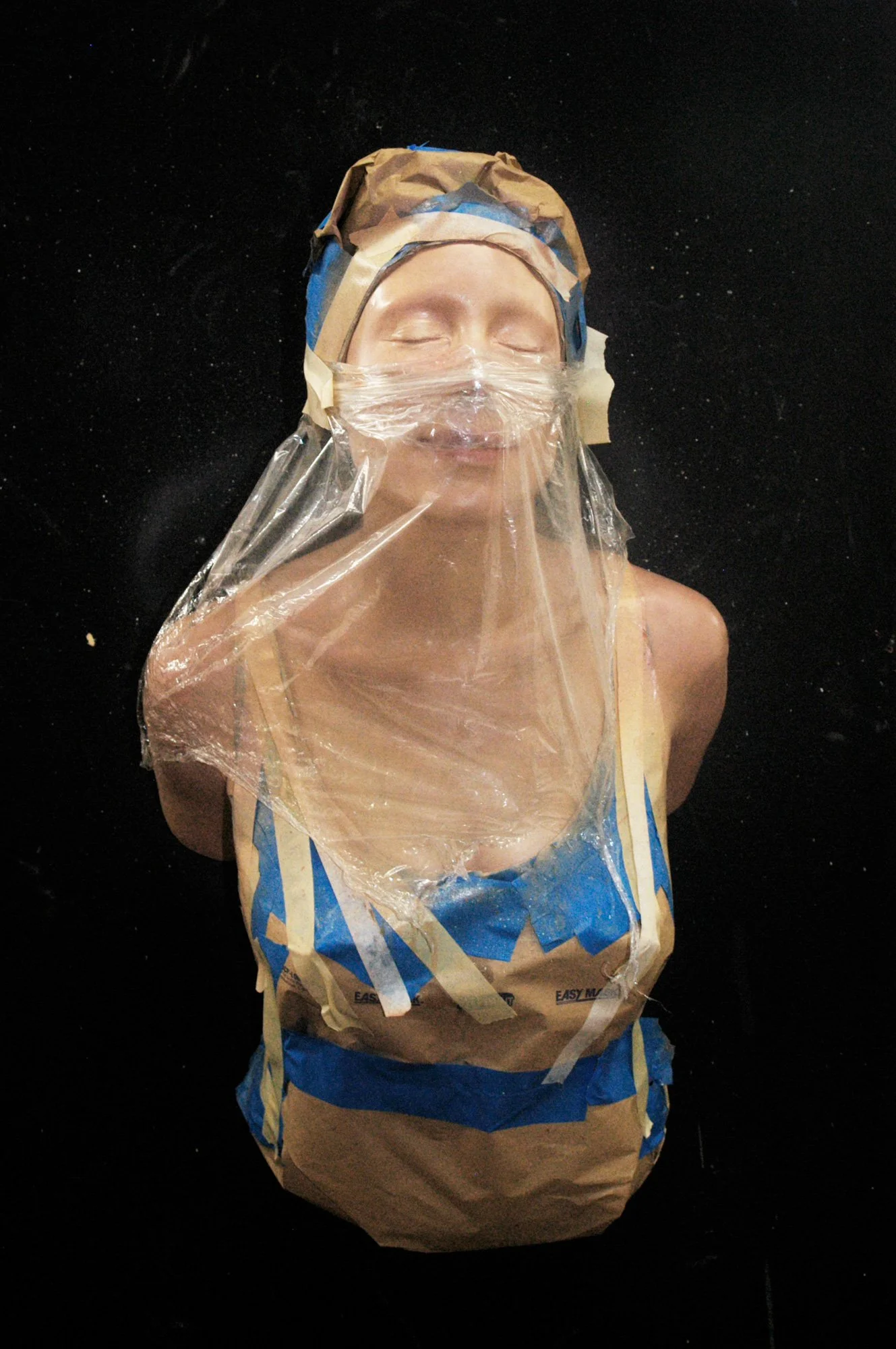
 It Seems by Carole Feuerman

In ‘It Seems’, we see the plight of too many women. These women are neither allowed to be seen nor heard. They feel like they are wrapped in cellophane and paper like objects to be bought or sold.

Chrysalis & The World by Carole Feuerman

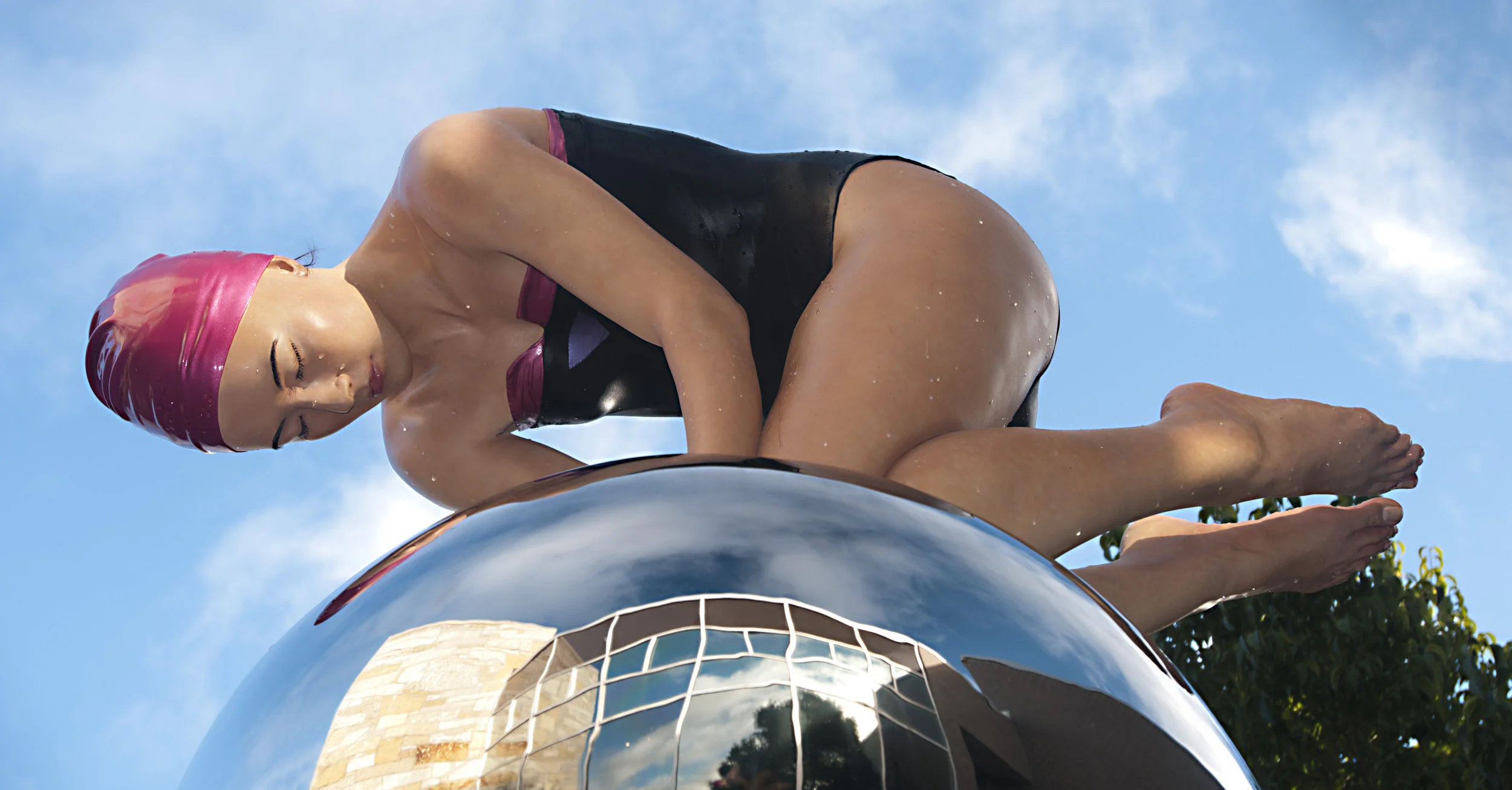
My most recent sculpture, ‘Chrysalis & The World’, I show a woman in meditation, praying for world peace and tolerance. She is seated on top of a polished stainless-steel sphere that shows the world. When the viewer looks into the sphere, they see themselves.

I have participated in Art Biennales all over the world. These fairs join nations together, showing the best of their country’s art. This year, I have the honor of exhibiting 10 of my sculptures during the Venice Biennale in Italy. The show is called Personal Structures, Crossing Borders. This fittingly titled exhibition will be visited by more than ½ a million people. They will come from all over the world. Unfortunately, only 35% of this year’s artists in the exhibition are woman. To date, no major international exhibition of contemporary art has achieved gender parity.

What world do you want to live in?

Can you imagine a world without art, a world without creativity?

Art motivates us to transform our thinking into saying and doing. Art is not an exclusive club. You can join in. It's free. These days, we are focused on achieving materialistic things and making money. Now is the time to focus on making our voices heard.

Each and every one of you can engage in art and claim your place in history. You may not realize it. When you make a souffle or even an omelet, you make creative choices about what to include in your dish. In a way, you have now become an artist.

At this critical juncture, I believe artists have an obligation to speak through our work. You’ve all heard the saying, ‘a picture is worth a thousand words’, but art is even more than that. Art teaches, it heals, and it influences people’s opinions. Art opens cultural borders and helps us get to know each other, transforming our differences.
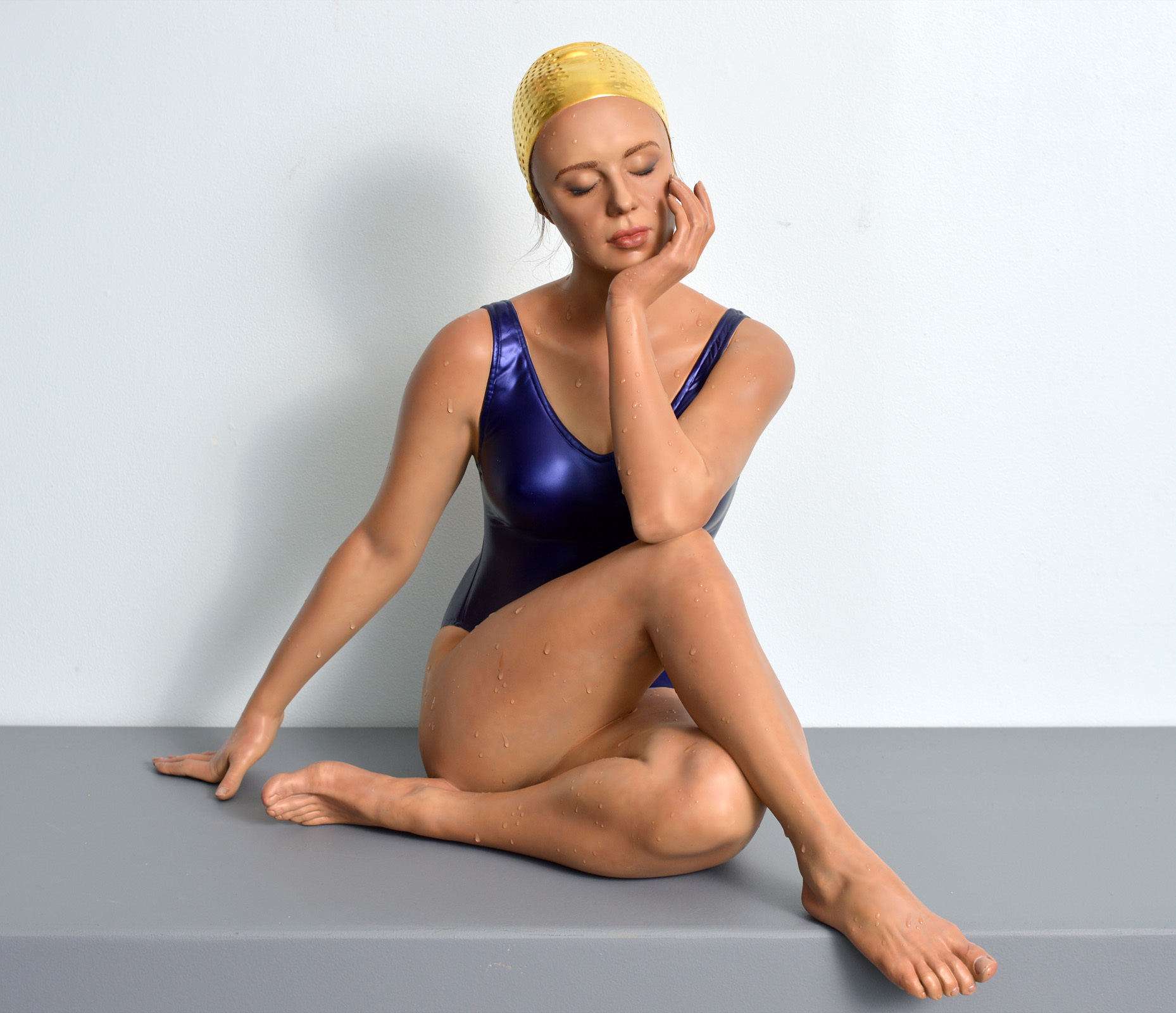
Contemplation by Carole Feuerman

And why do we love images so much?

One side of the human brain dedicates itself to visual processing. Our love of images lies with our cognitive ability to pay attention. Our encounters with art, and with others over art, can help us to be more tolerant. They allow us to recognize with one another. Encounters with art expand our notions of who we are. They show us that individual engagement in the world has actual consequences.

Ultimately, each of us must keep the courage of our convictions to meet the extraordinary challenges that confront our world. As you saw in my work, it’s about survival, balance, courage and strength. These are the messages that can bring global change. Each of you in this room can appreciate and understand this, and that’s why you are making a difference. That’s why you are here. You are critical to our survival as a global community. We must start now to change the thinking of the past. We should speak about the problems of the current day. We should discuss the infinite possibilities of the future. The moment we find our voice, we are set free!

As you saw in my work, it is about survival, balance, courage and strength. These are the messages that can bring global change. Each of you in this room can appreciate and understand this, and that's why you are making a difference. That's why you are here. They are critical to our survival as a global community.

You must start now to change the thinking of the past, and speak about the problems of the current? And the infinite possibilities of the future. The moment you find your voice, YOU ARE SET FREE!

Art Improves Brain Function by Carole

IMG_3117.jpeg

There is enough scientific evidence that proves art improves brain functioning. It has an impact on brain emotions, wave patterns, nervous system, and can actually increase serotonin levels. Besides, art can change any person's outlook and the way they experience the world. 

Years of research have provided a sufficient amount of data to prove that arts education influences everything from overall academic achievement to social and emotional development and so much more. Besides, research has proven the arts enhance neural systems that produce a wide spectrum of benefits ranging from numerous skills to creativity and improved emotional balance. Simply put, the arts are invaluable to our proper functioning individually and as a society as well. This article highlights how arts can improve brain functioning and well-being

1)    Growth Mindset

Through arts, people develop skills like grit, resilience, and a growth mindset which can help them master their craft, do well professionally and personally. Building a growth mindset with the help of arts and self-assessment can help succeed in life. Besides, setting realistic expectations and goals for people in general and then correlating the work done and results, people can begin to shift their motivation, resulting in a much healthier and more sustainable learning process.

For students to truly grow and progress, they must have a balanced view of internal motivation and external motivation. In the early stages of learning art forms, students will participate in this activity because it is fun (intrinsic motivation). However, this motivation will only make them move forward until now, and then their development will start to slow down or even stop. At this point, rely on external motivation to continue student growth. This may take the form of auditions, tests or other assessments

2)    Communication

Someone might say that communication might be the most important aspect of existence. Our world is built through communication. People learn a variety of communication skills through the study of art. Throughout the whole musical ensemble process, they must learn to communicate verbally, physically and emotionally with their peers, conductor and audience. Likewise, actors must not only convey spoken words to the audience but also express more intangible inner emotions to the script. Art is a way of expression that can transform thoughts and feelings into a unique form of communication-art itself.

3)    Improved Cognition

Research links music learning with "language memory, second language pronunciation accuracy, reading ability, and executive function" in youth (Frontiers in Neuroscience). By immersing students in art education, you can attract them to a highly complex and multifaceted job that combines many subjects (such as mathematics, history, language and science) and at the same time as having a unique connection culture.

In conclusion, art is an effective way to stimulate the mind, and anyone can learn it. It's a process of learning to create ourselves and experience the world with a new lens. Also, it supports the bigger view of life: symbols, beauty, storytelling, and allows us to be present at the moment and keeps the magic alive.


Unlocking Creativity: The Artist's Mind by Carole

_MG_1003.jpg

LIVING YOUR LIFE AS AN ARTIST

Some people believe that many artists lead punishing lives. They need to invest their skills and planning. They also invest money, time, and principles to a great extent. Some even are not recognized or appreciated in the way that they expect. It is incredibly important that you understand that artists are talented than you ever imagine. They can easily transform their imagination into a real picture. They draw it as a painting or on the canvas. Their life can be hard, but only they know what to make out of it. They can understand our culture, our traditions, and our history more than we can. They are more like scientists. The only difference is that a scientist experiments with different theories and natural elements. Artists experiment with their thoughts, ideas, imagination, thinking, and colors. Lots and lots of colors. By using colors effectively, they can illustrate important life aspects. They also evoke sensations in our thoughts. 

The Creativity of an Artist

Artists push beyond the usual norms. They start to question their own assumptions that no one else has questioned. They question their own thoughts and ideas, and then generate creativity. They can easily blend a lot of colors to give shape to their creativity. An artist can look around and take inspiration from every object. They see inspiration in every surface, every scene, and every color. Even a situation that appears interesting can inspire them. Artists will never stop learning about art. They constantly think about blending creativity into their work. Art now encompasses many forms and types. This diversity can easily confuse an artist on how to approach so many different aspects. The artistic process works on the questions of art, culture, tradition and their own thought-processes. 

The World and its Problems

As we know, the world has many problems like scarcity, poverty, hunger, economic conditions and globalization. Many of these tough problems even question our thought of mind and culture. Many of us would ignore such problems and live our life, but an artist sees these problems differently. Though they can't do much to change it, they still like to give it a picture. They create something out of it so that people would at least see it. This encourages people to do something about it collectively. With the artist’s work, the general audience can question their own thoughts. They can think about how they are playing their part in the world. That is what an artist does; they invoke thought of reasoning in people. They introduce new knowledge to the cultural realm with their artworks. They provoke people to contemplate it. 

Making someone think about anything other than themselves is difficult. An artist achieves this with creativity. They also use a blend of different colors. We live in a time full of color, images, and pictures. There is language, videos, stories, and music. There is a diversification of cultures and traditions. An artist brings out the positivism of these elements. They make something meaningful out of them. The artist can then motivate a reason of thought about culture. They can inspire reflection on spiritual, political, emotional, or even economical aspects of our world.

Carole Working on the Golden Mean.jpg

How to Understand Meaning and Creativity in Art by Carole

By Alex Chaban

Art is a dynamic phenomenon that keeps on changing, first as a visual in the artist’s mind and then as a  creation. However, art can only be created by those who have a sense of it, so it is necessary to find and define the meaning and creativity in art. Finding meaning and creativity in art is not an easy task, as much has already been inquired about it through artistic expressions. One must understand its implications through creativity, aesthetic forms, imagination, color, and expression. Defining the meaning and creativity of art is difficult, as many people can view it based on their perception. Many philosophers, theorists, critics, artists and muscians have argued about having the best approach to understanding art, meaning, and creativity.

Picture1.png

Image Source

Famous Artists of the World

It still emerges as a question in contemporary literature. True artists who have a greater understanding of art can attempt to determine the meaning and creativity of art, as they have spent their entire lifetime to view and understand art. Artists like Carole Feuerman, Andy Warhol, Pablo Picasso, Vincent van Gogh, Leonardo da Vinci, Michelangelo, Henri Matisse, Jackson Pollock, Edvard Munch, Claude Monet, Edward Hopper, Frida Kahlo, and many more. These artists can easily express their art and define its meaning and creativity. Art is always meant to be appreciated even when it may appear controversial or disturbing, as there is always a hidden meaning behind it. Art can only be appreciated by those who can understand and enjoy art. The best way to appreciate art is to understand its meaning and creativity from a different perspective, and not just look like different shades of color aesthetics.

Picture2.png

 Does Art Need to be ‘Understood’ or ‘Enjoyed’

 Most people argue that art needs to be enjoyed rather than understood. Just like life is simply meant to be experienced. However, the more we understand anything, the more we learn how it can  enhance our experience. To have a deeper understanding of art, its meaning, and creativity, we need to understand that art is more than just a visual expression. It can also represent an idea, experience, imagination, a thought-provoking subject, or even invoke motivation for the viewer.


Picture13.png

It can be made by using different techniques, materials, technology, or even ideas. More importantly, an artist needs to have the ability to bring his thoughts, ideas, and imagination onto the canvas, a patch or a paper, through the use of different materials. Mere novelty is not enough. He or she must have something unique, relevant or unlock a new way of imagining or thinking. It can be difficult, but true artists find it to be intriguing to bring their imagination and ideas through the use of art. Many have accomplished so much more than just money through their artworks. Many of us may even think that creating art only belongs to those naturally gifted. However, every one of us has some level of creativity and potential or even some unique talent that we may not know. You just need to find and exploit it, just as an artist does with their paintings. One must understand to find its meaning and purpose.     

Picture4.png

Defining Meaning and Creativity in Art

 Most of us can view art as a product, but true artist finds their work to have a profound meaning and can easily define the creativity behind it. Art is not something that can be created by merely thinking about it. There is a thought process behind it. For example, the famous painting, Mona Lisa, by Leonardo Da Vinci, is believed to be painted between 1503 and 1506. The painting itself has captured the fascination of millions of people around the world. The artist claims that he wanted to capture the enigmatic facial expressions of Mona Lisa’s smile, but there are more hidden messages and creativity behind this painting. Many have argued that the painting reflects the idea of establishing a link between humanity and nature.

Picture5.png

 In contrast, others think her smile is fake or forceful, yet it appears to be alluring. Many historians, philosophers, and thinkers have argued over its hidden meaning and creativity, but none have achieved its conclusion. Yet, the painting has inspired millions of people to still look and think upon it. As art is taken as an expression, it can give out a unique meaning and creativity.

 To learn more about art and it's meaning and creativity, I would recommend the book ‘For my Legacy’ by the artist Carole Feuerman, who has motivated many people around the world through her story and art. She tells us about how she was inspired to become an artist as she loved paintings. She also tells us about how she never gave up on her dream to become an artist, as she started painting on the floor and decided to nurture her gift since the age of ten by perfecting different art techniques. She has founded the Carole A. Feuerman Sculpture Foundation, and her artworks are owned by 18 museums. She is also one of the three founding members of the hyper-realist movement that began in the late ’70s and still exists today.  


The Art of Sculpting by Carole

Carole+Working+in+Mineola+Studio+in+1981.jpg

Sculpture is that art that stands side-by-side with other expressive forms of art such as painting and photography to convey the yearnings and emotions of humankind. Besides, the human body has been one of its preferred subjects to recreate.

_MG_3484.jpg

Sculpting artists have shown representations, ideas and obsessions about the human body all over the centuries. Such sculptors were and are passionate observers of the human anatomy as they see it on the surface. Also, concept of symmetry, balance and movement are conveyed with human body sculptures according to the impression of the artists. Other forms of sculpture that are more contemporary can be, light works, multi media, abstract forms or found objects.

The pieces of art, carved in different materials like wood, clay, marble, steel, bronze, concrete, and many others are either executed in realistic, life-like depictions. Some artists must be keen observers of the unique differences between the male and female anatomy because they exclusively and elaborately sculpt the separate uniqueness to their sculptures. The others artists creating public works must be able to make wsculptures that are archival, will withdtand the elements, won’t fall over,  be earthquake proof,  and have no sharp edges that would hurt the viewer.

Sculptures & Other Art Forms

The sculpture is a three-dimensional art, having width, length, and height. It can be performed on any material that can be carved bit by bit. Comparatively, painting expresses art through a surface. Any artist can also paint on any surface that he/she desires like a canvas or even a wall. However, it’s two-dimensional and doesn’t interject into space.

Besides, photography is the art form somewhat like painting because it’s also two-dimensional. But, you can walk around a sculpture and still see parts of it; however, you can only walk in front of a painting or photograph to be able to appreciate it.

But both painting and sculpture take a much longer time to accomplish ranging from hours, days, months, or even years compared to photography. However, with digital photography, it only takes a few minutes or even seconds to take a picture that is art worthy. In this age of modernity, it still takes a few days to accomplish an art-worthy sculpture or painting.

_MG_7525.jpg

Sculpting Materials

_MG_7529.jpg

When it comes to sculpting, any material that can be chiseled into a 3D form can be used. Also, many other materials can be used to make non- representational artworks. The sculptures that we are used to seeing last for centuries like those sculpted in stone, marble, bronze or steel. However, certain sculptures only last for hours like ice sculptures, which eventually melt after being appreciated for some time.

Classic Vs Modern

Sculptures from former centuries were fixated on tradition, biblical personalities and events. Their depiction of the human anatomy was almost, whether they emitted a positive or negative emotional depiction. Also, such sculptures were almost life-like in representation.

Conversely, modern sculptures also have realistic aspects of their form, but gradually, most present-day sculptures are in abstract form. And, they don’t always follow old-fashioned sculpting of bodies with one head, two arms, two legs, one torso. Instead, artists distort such conservative human anatomy concept into portrayals as to what sculptors perceive in their subconscious and dreams. All of this makes sculpture as an art form more exciting as this art form continues to evolve.

_MG_3484.jpg

Discover How Art Enhances Mental Well-being by Carole

DSCN1139.JPG

How Art Can Help Us Heal

Art helps us heal?

It forces humans to create a connection between their body and mind. Unlike physical workouts that focus on your body, physical workouts target your body. Meditation brings clarity to your mind. Art engages both body and mind. This dual engagement accelerates healing.

When mixed with traditional treatment, art therapy can be noteworthy in treating mental issues. It helps in self-discovery. The activities of art allow people to uncover deep buried emotions. They can then acknowledge these feelings in the sub-conscious mind.  It also uplifts our self-esteem as creating an artistic piece of work instills confidence and appreciation.  

WHAT EVIDENCE DO WE HAVE ABOUT THIS RELATIONSHIP?

Drawing, coloring, doodling, or painting has been scientifically proven to help people overcome traumatic situations in life. As individuals create art, they analyze what they have made and how it makes them feel. Through exploring their art, we can find themes and conflicts influencing their behaviors, thoughts, and emotions. 

A research study ‘The Connection Between Art, Healing, and Public Health’ shows that art enables people to express their experiences. These are experiences that couldn't be easily put into words. An example is the painful treatment of cancer. 

SITUATIONS WHERE ART THERAPY CAN BE UTILIZED 

  • Adults experience severe depression and anxiety for several reasons. It is due to the loss of a loved one or a job. It also results from failure in relationships, financial hardships, health issues, or any traumatic event. 

  • Children suffering from social and behavioral problems at home or at school.

  • People experiencing brain injury or mental health issues.

There are a range of conditions that can be effectively treated by using art therapy. These include aging-related issues, eating disorders, and emotional difficulties. Art therapy can also help with family problems, substance abuse, psychological issues, and self-esteem issues. 

* Working in my studio copy.JPG

ART THERAPY EXERCISES TO ADD IN YOUR SELF-CARE ROUTINE 

Here’s a list of art therapy exercises that everyone should look for. 

1.     Create an art journal 

Journals don’t just have to be around words. You can create your own art journal as well. Use this journal to visually express your emotions.  

2.     Go on a nature walk to get inspiration

Incorporating nature into your art practice is a win-win situation. Nature soothes our five senses and provides relaxation. Go for a walk and collect things you find interesting like stones, pine, leaves, and other objects. Use these objects to create a magazine, sculpture, or an art wall. Now answer this; what drew you to it?

3.     Create art in the dark

Not being capable of seeing what you are making can be very relaxing. Not having to think about whether it’s not the right can also be calming. 

4.     Draw visual image of your good qualities

By making drawings of your positive traits, you’ll feel more optimistic and confident about yourself. This is your any good habits like helping older people with their daily chores or feeding birds etc. 

5.     Create a stress painting 

In this art exercise, you’ll focus entirely on painting what you’re feeling inside. Pick colors that represent your stress and anxiety. 

6.     Doodling 

Doodles are abstract patterns or designs but can also include phallic scenes, cartoons and comic characters. 

7.     Just color 

So many times, the simple act of drawing shapes and coloring them is the only relaxation you need. Find a coloring book, or create your own favorite characters or shapes and color them.

8.     Make response art

We all have a song, poem, or quote that we connect with in some way. Choose any one and use it as a foundation to create art. Respond to it through coloring with color pencils or crayons.

Learning about Sculpture by Carole

By Alex Caban

Sculpture has not really received the attention it deserves compared to painting, photography, and modern Even intellectuals and philosophers of art do not recognize how difficult it is to make a sculpture art. Sculptural art stands out in its own classical and contemporary forms. Those who make it, know how difficult and delicate it is to make figurative sculpture art of a person. People over the years have raised questions about its ontology, representation, and person character. Thus they should truly appreciate the painstaking process it takes to make a truly remarkable sculpture art worth admiration.

Blog 5 real Picture1.jpg

 The History of Sculpture Art

 Before the 20th century, sculpture art was widely received and admired by people, especially in the Vatican City of Rome, where different sculptures portrayed angels and demons for the representation of religion. It became more than a tradition as all sculptures in the western world where the representation of celebrities. More and more sculptures began to be made as freestanding objects. As its progression grew, sculptures were made on famous old buildings and altarpieces. Sculptures are mostly made out of durable materials such as stone, bronze, plaster, and wood. 

Blog 5 Picture1.jpg

 Much Deserved Recognition

 As modern forms of art began to make their mark in digital, photography, materialism, sculpture making practices began to slow down over the years. Many sculpture statues and abstract works of Barbara Hepworth and Louise Nevelson are still appreciated but represented imaginary objects. The most intriguing thing about sculpture art is that they represent a world of its own. A single sculpture can define a whole story, whether it is an imaginary object, a historical figure, or a celebrity. 

blog 5 Picture2.jpg

 They are even famous for describing an environment, as we explore the meaning through them. Some sculptures can even tell secret coded messages or mysteriously point at something of importance, as shown in famous movies like National treasure and Angels and Demons. However, the treatment and the making of a sculpture is exceptionally delicate and expensive. Many people aim to distinguish the traditional divisions and importance of sculptures from paintings and architecture. Some have even discredited it as performance art. However, sculptures more than just figurative statues or three-dimensional non-art objects. They define a whole new meaning of art by its complex contours and should be held in high regard regarding its admiration and appreciation.

Blog 5 Picture3.jpg

Sculptures should be distinguished separately from other forms of art, as they represent historical traditions, information, and practices of the previous era. There is a sense of nostalgia attached to them, as they can give the pleasure of view and touch. To learn more about the importance of sculpture art, it is better to read the book Carole A. Feuerman: 50 Years of Looking Good by the famous artist Carole Feuerman. As a renowned artist to have made some interesting and modernistic sculptures herself, she has given an in-depth view and perception of art and how she became an artist. She also provides her best interpretation of how she came to know about her passion for art and understand it deeply.

How Digital Tools Revolutionize Modern Art by Carole

front.jpg

THE MODERN FORM OF ART – DIGITAL ARTWORK

Nowadays, traditional artwork has triumphed with the modern form of art, digital artwork. Many artists are beginning to learn and show their skills through software and drawing sketches with a digital pen. Still, digital artwork can take several forms, including photography, charts, graphs, artistic diagrams, and much more. Nowadays, you can create artwork with a camera, scanner, or even imaging or editing software, rather than using your hand. Universities have begun to teach how they use creative software rather than artist practice drawing or sketches.

Digital artworks are taking their place in marketing and advertising. As a result, the value for traditional artwork is slowly diminishing. Traditional artworks have been developed, transformed, and varied through the stages of history and culture. They represent various cultures and civilizations before us through paintings, sculptures, architecture, stone works, and much more. Art is growing more advanced and sophisticated with the use of digital software and computer programs. The world is witnessing rapid developments in all spheres of life. As a result, people need more sophistication and modernism in art. In the old days, it was all about the skill and craft of an artist. They made the best use of their hand and mind to create unique pieces of artwork. Nowadays, more and more people want to create easily without wasting much time. They rush creativity with the use of software applications, as the trend is becoming more fast-paced.

The Use of Art Related Software Applications

Software applications used to draw art can influence more means of creativity. You can use a diverse range of color codes. You can also draw simplistic or complex shapes or lines within a matter of seconds. Specialized materials and tools are right in front of your computer screens. With tremendous developments in software applications, anyone can draw digital artworks to make them look appealing. It can easily bring about changes in the composition or color of digital artwork. It can also change the whole aspect and redraw what needs to be adjusted with just a few clicks. More with the revolutionized form of art, more and more people can integrate electronic sensors. They can also use lasers, digital pens, and green screens. This makes art look more compelling. 

With the use of software applications and modern digital artworks, many artists have gotten involved. This includes those who weren’t that skilled with their hand in drawing or sketching. It has also enabled artists to enter into a new paradigm of art. On this new stage, an artist can replace their manual or traditional skills. They can use their imagination or references in a contemporary manner.

Sophistication in the Field of Creativity

Technological contributions in digital hardware and software have greatly influenced art. As a result, artists are now doing innovative and distinctive aesthetic experiments. They use these innovations to create more complex artworks. First, they draw or sketch it with their computer applications. Then they give it a complex blueprint form. Finally, they go for the real thing. Such software tools and applications help satisfy their artistic desires. Users need to learn the software. This helps them understand its limitations and capabilities. Some are calling the use of software applications the development of another form of digital creativity.